
The World Meteorological Organization (WMO) said on 19 August that, with El Niño strengthening further in the second half of 2026, the Greater Horn of Africa is expected to experience warmer and wetter weather than usual in the fourth quarter. The equatorial and southern parts of the region are entering their key rainy season; in parts of Ethiopia, Kenya, and Somalia, October-to-December rainfall can account for up to 70% of annual totals, while parts of Rwanda, Burundi, Tanzania, and Uganda can receive up to 40%.
According to the latest seasonal climate outlook issued by the IGAD Climate Prediction and Applications Centre (ICPAC) together with national meteorological and hydrological services in the region, the probability of above-normal rainfall in the Greater Horn of Africa in the fourth quarter has increased significantly. Regional downscaled forecasts show a 90% chance of above-average rainfall in southern Ethiopia, central and southern Somalia, and northeastern Kenya; seasonal rainfall may even exceed 400 mm in parts of central and southern Somalia. While these wetter conditions could ease drought, they may also trigger flooding, threatening ecosystems and local livelihoods.
The climate anomaly is set against the combined influence of El Niño and the Indian Ocean Dipole (IOD). A positive phase of the IOD is also expected to develop from August to October 2026, conditions that typically enhance rainfall during the region’s rainy season. The WMO will issue its next El Niño Update on 3 September to provide authoritative information for national decision-makers. Seasonal forecast information generated by its network of regional climate centres and climate outlook systems has already been channeled through WMO’s humanitarian coordination mechanism to provide expert advice to the humanitarian sector, supporting anticipatory action to protect the most vulnerable populations.
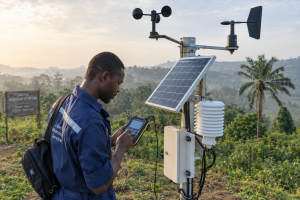
From a meteorological monitoring perspective, the impacts of such large-scale climate events vary significantly across space, and traditional weather stations alone cannot easily capture localised rainstorms and flood risks. The industry is accelerating the deployment of multi-parameter, high-density ground-based observation networks that combine micro weather stations, ultrasonic anemometers, and atmospheric electric field meters with satellite remote sensing and numerical weather prediction to deliver high-resolution live monitoring and early warning services for flood control, agricultural disaster prevention, and emergency response. Under complex backgrounds such as El Niño, no single technical approach can meet all needs; multi-source observational data must be integrated to improve awareness of the spatiotemporal evolution of extreme rainfall and provide more accurate initial fields and validation for seasonal-scale forecasts.
Source: World Meteorological Organization (WMO) (link: https://wmo.int/media/news/el-nino-impacts-greater-horn-of-africa)
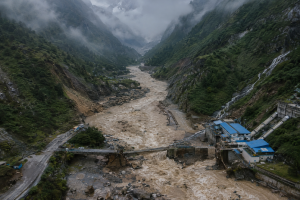 Nepal Flood Cascading Risks Highlight High-Mountain Weather
 WMO Supports Five Countries in Strengthening Multi-Hazard Ea
 Cabo Verde Validates Early Warning Roadmap After Tropical St