
The World Meteorological Organization (WMO) reports tangible progress under the Climate Risk and Early Warning Systems (CREWS) Djibouti initiative, implemented jointly with the UN Office for Disaster Risk Reduction (UNDRR). Launched in 2024 with a total investment of USD 3.6 million over four years, the project is designed to advance people-centred early warning systems, strengthen Djibouti’s capacity to forecast and respond to flash floods, landslides and other hydro-meteorological hazards, and turn weather and climate information into early action that protects lives, livelihoods and long-term resilience.

Progress has been achieved across all six project components, covering institutional strengthening, technological modernisation, capacity development and community preparedness. At the national level, institutions have enhanced their observation, forecasting and meteorological information dissemination capabilities through the deployment of ClimWeb, an open-source, award-winning website developed by the WMO Regional Office for Africa. Institutional coordination, operational procedures and warning issuance mechanisms have also been improved, with results to be reflected in the upcoming national strategic plan and the 2026–2030 National Framework for Climate Services.
At the community level, the Djibouti Red Crescent Society (DRCS), with technical support from WMO and Conoscenza e Innovazione (K&I), has strengthened flood preparedness and established Community-Based Early Warning Systems (CBEWS) in flood-prone urban and rural areas. Through participatory hazard mapping, community flood management planning and first-aid training, the preparedness capacity of local authorities, emergency responders and volunteers has been enhanced, providing the “last mile” support needed to turn warnings into action on the ground.
From a meteorological monitoring perspective, the project illustrates a key evolution in early warning systems: the core of a Multi-Hazard Early Warning System (MHEWS) lies in integrating data from weather radars, automatic weather stations, rain gauges and water-level sensors into a unified risk picture, and delivering it to decision-makers and the public through accessible platforms and clear processes. Combining a national unified information dissemination website with community-level warning response mechanisms is essential to improving the accuracy and effectiveness of warnings.
For commercial weather services, the Djibouti case offers a valuable lesson: the value of an early warning system lies not in the technology itself, but in whether it is genuinely used by communities. Low-cost, easily maintainable sensor networks with open interfaces, paired with community-familiar information channels (such as radio, SMS and signage) and emergency drills, are an effective path to disaster resilience. This also aligns with the international trend of moving from “forecasts” to “early action” in meteorological services.
Source: World Meteorological Organization (WMO) (link: https://wmo.int/media/project-update/from-forecasts-early-action-strengthening-community-preparedness-djibouti)
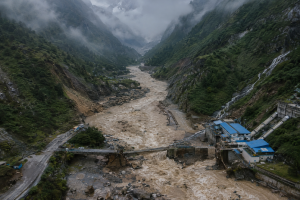 Nepal Flood Cascading Risks Highlight High-Mountain Weather
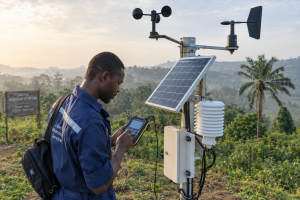 WMO Supports Five Countries in Strengthening Multi-Hazard Ea
 Cabo Verde Validates Early Warning Roadmap After Tropical St