
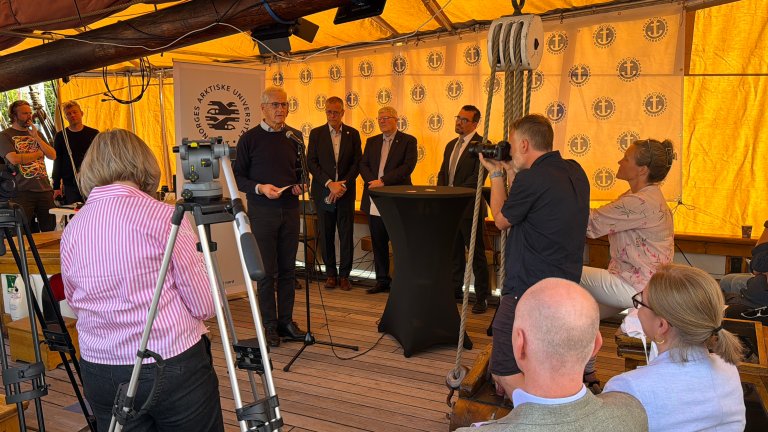
The World Meteorological Organization has announced that Norway will host the fifth International Polar Year (IPY-5), with the official polar year period set for 2032–2033. UiT The Arctic University of Norway and the Norwegian Polar Institute, together with partners from South Korea and Chile, will jointly run the International Polar Year Secretariat. Tromsø will serve as the main hub for coordinating global polar research over the next decade, focusing on the impacts of climate change in the Arctic and Antarctic and bringing together scientists, Indigenous knowledge holders, and international partners to provide decision-making support for climate mitigation and adaptation.
From a meteorological monitoring perspective, an International Polar Year is a crucial opportunity to improve the global polar observing system. The polar regions are the Earth’s cold sources; changes in their atmosphere, sea ice, and snow cover influence weather and climate in mid- and low-latitude regions through circulation systems. However, the polar environment is harsh, ground station networks are sparse, and satellite remote sensing cannot fully replace field observations. Multi-country cooperation in equipment deployment, data sharing, and algorithmic coordination will help build a more continuous polar meteorological monitoring network and improve understanding of extreme weather and long-term climate trends.
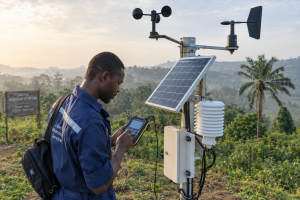
In polar settings, meteorological monitoring equipment must be highly reliable, low-power, and resistant to low temperatures and strong winds. Common compact weather stations in the industry can integrate observations of temperature, humidity, pressure, wind, and other variables. Ultrasonic anemometers use acoustic measurement principles and have no mechanical moving parts, giving them advantages in freezing rain and severe snowstorms. Atmospheric electric field meters can detect the precursors of lightning activity in real time, providing early warning for polar scientific expeditions and engineering safety. Water quality monitoring sensors can track the physicochemical changes in meltwater and nearshore water bodies, providing a data basis for understanding the polar water cycle. Although these technologies were not developed specifically for the polar year, they can gain wider testing and application scenarios under the framework of international cooperation.
The value of the polar year lies not only in scientific exploration but also in translating observational data into climate action. Through unified data platforms with common standards and multidisciplinary integration, researchers can simulate polar processes more accurately, improve climate models, and guide disaster risk reduction and ecological conservation. At the same time, Norway’s cooperation model with Asian and South American countries reflects the inevitable trend of polar research moving from a regional topic to global joint action. For the meteorological service industry, participating in the construction of polar monitoring networks and supplying miniaturized sensors adapted to extreme environments are directions worth watching in the future.
Source: World Meteorological Organization (WMO) (Link: https://wmo.int/media/news-from-members/norway-host-international-polar-year-2032-2033)
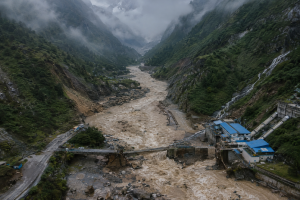 Nepal Flood Cascading Risks Highlight High-Mountain Weather
 WMO Supports Five Countries in Strengthening Multi-Hazard Ea
 Cabo Verde Validates Early Warning Roadmap After Tropical St