
Autumn is a critical season for meteorological monitoring: the temperature difference between day and night widens, dew and frost alternate, strong wind events increase, and autumn harvesting and planting are sensitive to changes in near-surface temperature and soil moisture. A reliable, low-maintenance micro weather station can provide timely environmental reference for orchards, farmland, warehouses, and outdoor operations.
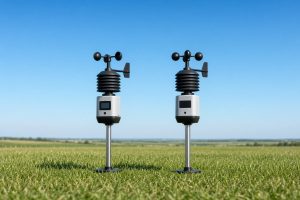
In terms of composition, a micro weather station usually consists of four major parts: sensors, a data logger, a power supply unit, and a communication module. The sensors measure temperature, humidity, wind speed, wind direction, rainfall, and other variables; the data logger samples, converts, and temporarily stores the signals; the power supply unit (lithium battery or solar power) supports continuous operation in the field; and the communication module uploads data to the platform via 4G, LoRa, or NB-IoT. Some models also integrate an atmospheric electric field instrument or water quality sensor to form a composite monitoring node.
When selecting a station, the following points are important. First, measurement accuracy: autumn diurnal temperature differences often exceed 10°C, so temperature sensors with a radiation shield are recommended to reduce errors caused by solar radiation and surface reflection. Second, environmental adaptability: late autumn brings frequent dew and light frost, so the equipment protection rating should be at least IP65, and sensor probes should have an anti-condensation coating or automatic heating function. Third, the power supply strategy: because sunlight is weaker in autumn and winter, the solar panel area and battery capacity must be calculated based on the shortest sunshine hours; otherwise, nighttime power shortages may occur. Fourth, communication and power consumption: the data upload frequency can be adjusted, and a low-power mode can significantly extend operational life in scenarios without external power.
From the perspective of industry applications, orchards in autumn are most concerned about the impact of nighttime low temperatures and strong winds on fruit. Placing a micro weather station can provide early warning of changes in the temperature inversion layer. Grain depots need to monitor temperature and humidity in autumn to prevent mold and support ventilation decisions. Outdoor engineering projects focus on wind speed, wind direction, and the atmospheric electric field to provide safety references for high-altitude work or temporary facilities. With threshold alarms, these scenarios can directly benefit from the data.
Therefore, selecting a micro weather station is not about choosing the highest specifications possible, but about balancing the actual monitoring objectives, installation environment, and maintenance conditions. From sensor accuracy to protection rating, from power supply reliability to communication range, every factor directly affects the usability of on-site services. Truly reliable meteorological monitoring is always built on scenario-matched hardware configuration and long-term stable data collection.
 Pacific Island Countries Advance Weather Early Warning and O
 How to Choose Between Six-Element and Seven-Element Weather
 Boundary-Layer Wind Profiler Radar: Basics and Summer Applic