
The boundary-layer wind profiler radar is a remote sensing instrument used for continuous detection of wind fields from near the surface to the upper part of the boundary layer. It transmits electromagnetic pulses at oblique angles and receives backscattered signals from atmospheric turbulence. Using Doppler shift, the radar derives radial velocities at different heights and synthesizes horizontal wind direction and speed. Compared with conventional radiosondes and meteorological towers, a wind profiler radar can complete a vertical profile measurement in a few minutes, significantly improving the temporal resolution of wind-field observations.
In modern meteorological observation, the value of a boundary-layer wind profiler radar is mainly reflected in continuous vertical monitoring. It can run unattended and provide all-weather output of wind speed, wind direction, vertical velocity, and turbulence intensity. The system typically uses phased-array or mechanically scanned antennas and multi-beam detection, allowing wind-field structures at multiple height levels to be estimated simultaneously from the same location. This advantage makes it an effective complement to ground weather stations and upper-air sounding systems.
Summer is the peak season for severe convective weather. During this period, complex wind-field structures such as gust fronts, low-level jets, and vertical wind shear frequently appear in the boundary layer. High-resolution wind profiler data can help identify signals of airflow convergence and lifting, providing an important reference for nowcasting of meso- and small-scale weather systems such as afternoon thunderstorms and heavy rainfall. During the passage of a low-level jet, the radar can clearly show the height of maximum wind speed and its variation with time, which is valuable for wind energy assessment and the safety of high-altitude operations.
For project-specific system selection, key parameters include detection height, vertical resolution, temporal resolution, antenna aperture, transmit power, and signal processing capability. Requirements for electromagnetic wave attenuation and anti-interference performance also vary with seasonal and regional conditions. In summer, high temperature and humidity, frequent rain, and lightning require robust waterproofing and lightning protection, and the equipment must be able to retain valid wind-field signals under heavy precipitation. Data quality control and spectral analysis algorithms are equally important.
In operational applications, wind profiler data can be used for wind-field monitoring around electrical power facilities, wind shear warning on aviation routes, selection of pesticide spraying time windows in agriculture, and analysis of pollutant dispersion conditions in meteorological services. To obtain a more complete three-dimensional observation picture, combining a wind profiler radar with ground weather stations, ultrasonic anemometers, atmospheric electric field meters, and other ground-based hardware can capture both vertical profiles and near-surface variations simultaneously.
 Pacific Island Countries Advance Weather Early Warning and O
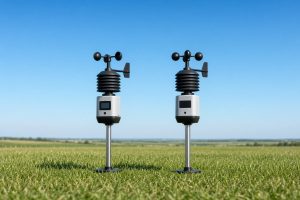 How to Choose Between Six-Element and Seven-Element Weather
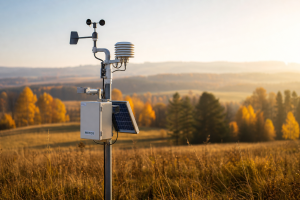 Micro Weather Station Components and Autumn Selection Essent