
Blue Pacific Early Warning Goals: Observations, Data, and Climate Services
The World Meteorological Organization (WMO) reported on September 14 that representatives from 15 Pacific national meteorological and hydrological services held a three-day exchange in Nuku’alofa, Tonga, strengthening regional collaboration around weather, climate, and water services, with the shared goal of better protecting lives, livelihoods, ecosystems, and economies across the Pacific. The Eighth Pacific Meteorological Council, under the theme “Weather Ready for a Safe and Sustainable Blue Pacific”, brought together meteorological leaders, experts, and partners to advance the modernization and capacity-building of weather, climate, and hydrological services.
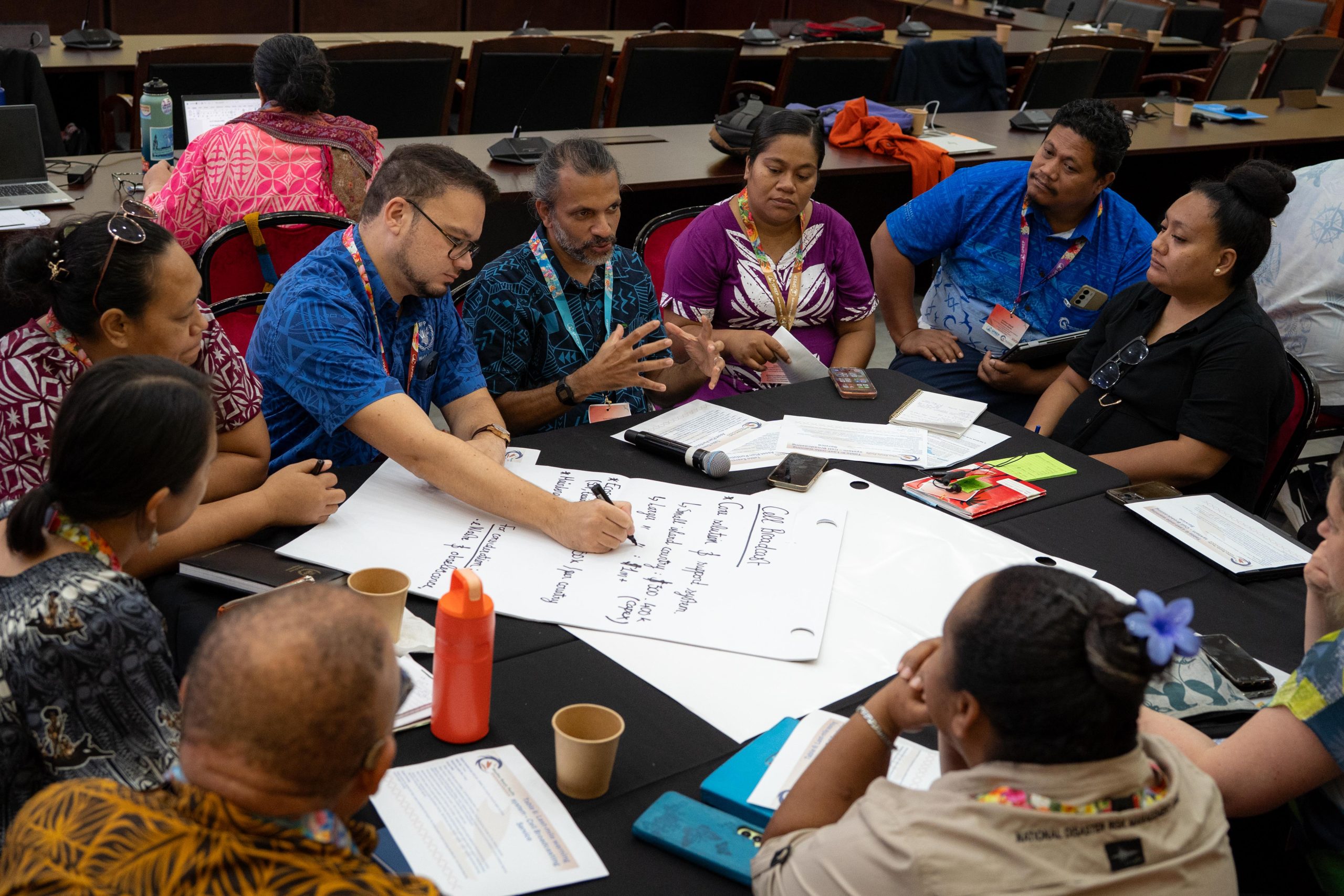
According to WMO, from September 10 to 14, participants from 26 member countries and territories discussed shared priorities and challenges, including strengthening early warning systems, improving climate services, enhancing observations and data, and ensuring that weather and climate information reaches the people and communities that need it most.
The Value of Early Warning Depends on Reaching the Last Mile
Tonga’s Deputy Prime Minister Viliami Latu noted that a forecast has limited value if it cannot reach the farmer deciding whether to plant, the fisher preparing to go to sea, the airline assessing whether it is safe to fly, the school deciding whether children should go home, or the family weighing whether to evacuate. He stressed that “Early Warnings for All” must truly mean all people, including residents of outer islands, persons with disabilities, women, children, older persons, and those living in the most remote communities; no Pacific island country is too small, and no community is too remote, to deserve effective early warnings.
This speaks to a common weakness in early warning systems: last-mile reach and population coverage are just as critical as forecasting technology itself.
Regional Coordination Mechanisms and New Strategic Directions
The Pacific Meteorological Council is the region’s primary platform for cooperation among meteorological and hydrological services, bringing countries and partners together to strengthen weather, climate, and water services. The exchange was hosted by the Government of Tonga, in collaboration with the Secretariat of the Pacific Regional Environment Programme (SPREP) and WMO, and also covered “a decade of progress and new strategic directions.”
Following this, the Fourth Pacific Meteorological Ministers Meeting will be held on September 16, bringing together Pacific ministers responsible for meteorology and related portfolios to advance regional cooperation in meteorology and related fields at a higher level.
Industry Perspective: The Observational Network Is the Starting Point for “Weather Ready”
From the perspective of meteorological monitoring and applications, the upper limit of early warning capability is often determined by the observational network. Pacific island countries generally face constraints such as limited land area, sparse stations, and limited cross-ocean communications and power supply, making observational data from the ocean surface and remote islands especially scarce. This makes automatic observational equipment that is compact, low-power, solar-powered, and adapted to high-salt-spray and strong-wind environments highly suitable—continuous observations of wind speed and direction, air pressure, temperature, and humidity are essential inputs for tropical cyclone track and intensity assessment, nowcasting, and early warning triggers.
The two main threads of this agenda—“enhancing observations and data” and “ensuring information reaches the people who need it most”—correspond to a complete technology chain: front-end sensors and automatic stations provide high-quality, high-frequency data; the midstream uses data assimilation, numerical models, and nowcasting algorithms to generate early warning products; and the last mile delivers them through multilingual, multi-channel, audience-specific approaches. For islands and coastal areas, lightning detection and observations of oceanographic and water-quality parameters can also support fisheries, tourism, and ecosystem protection, extending meteorological services from “forecasting the weather” to “supporting decisions.”
The environmental adaptability and data stability of observational equipment often determine whether warnings can be triggered at critical moments, and Multi-Series weather stations, designed for long-term unattended field deployment, are a foundational component in closing island observation gaps.
Source: World Meteorological Organization (WMO) (link: https://wmo.int/media/news/pacific-meteorological-council-aims-weather-ready-blue-pacific)
 How to Choose Between Six-Element and Seven-Element Weather
 Micro Weather Station Components and Autumn Selection Essent
 Boundary-Layer Wind Profiler Radar: Basics and Summer Applic