
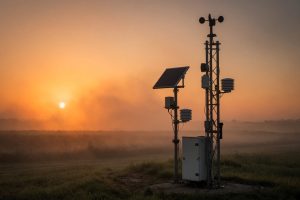
Autumn is a critical maintenance season for automatic weather stations. Increasing diurnal temperature ranges, heavier leaf fall, and condensation in the early morning and evening directly affect sensor measurement accuracy and equipment service life. Maintenance personnel should follow a clear autumn checklist and conduct systematic checks of the monitoring hardware.
Routine inspection begins with the exterior and structure. Check the mast and support brackets for looseness, inspect aviation connectors and cables for aging or damage, and examine the solar panel surface for fallen leaves, bird droppings, or dust accumulation—especially avoid leaf buildup that reduces charging efficiency and drains the battery. Clear any obstructions around the installation site in time to ensure smooth airflow through the observation area. Also check the grounding circuit and use a multimeter to confirm normal resistance, preventing degraded performance after the thunderstorm season.
Sensors are the core of maintenance. For tipping-bucket rain gauges, fallen leaves and dust are often the primary causes of blocked water inlets and missed rainfall measurements, so take out the filter screen and remove debris from the tipping bucket shaft. For temperature and humidity sensors, inspect the radiation shield for stains and, if needed, clean it with a soft-bristled brush. Autumn nights are humid and condensation tends to form on inner surfaces; wipe it away promptly and keep the shield well ventilated. For wind speed and direction, if a mechanical cup anemometer and wind vane are used, check that the bearings rotate smoothly and remove any tangled matter. An ultrasonic wind sensor has no mechanical wear, but its probes should be checked for dew or dirt, as retained water can interfere with the accuracy of sonic wind measurement. Use dedicated tools where possible and avoid touching the sensitive sensing elements.
Power supply and data transmission are also key in autumn maintenance. Terminals on the solar charge controller and battery may oxidize because of temperature differences; check voltages and tighten the connections. For areas with long periods of low sunlight, consider optimizing the solar panel angle in advance or adding backup power. For wireless transmission, routinely check signal strength and data transmission logs to avoid interruptions caused by loose antennas or oxidized connectors.
From the measurement principle, an automatic weather station works by keeping its sensors in close contact with the real environment and maintaining a stable response; any blockage, condensation, or contamination introduces errors. Calibration and comparison are equally necessary: regularly inspect the sensors’ zero points and calibration validity dates, and before the first frost in autumn, confirm that the temperature sensor reads close to the standard value in an ice-water mixture.
In practical equipment selection, for observation sites subject to heavy leaf fall, large temperature swings, and inconvenient maintenance, priority can be given to an ultrasonic wind speed/direction instrument with no moving parts and an atmospheric electric field monitor with heating/de-icing design, so as to reduce the frequency of manual inspections after autumn and improve data continuity.
 WMO Report Warns: Wildfires and Heatwaves Weigh on Global Ai
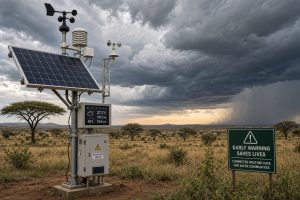 Africa Early Warning Action Call Highlights Gaps in Meteorol
 The Fundamental Workflow of Meteorological Data Quality Cont