
According to information released by the World Meteorological Organization (WMO), global land and ocean surface temperatures both set records in July 2026, as heatwaves, prolonged drought, dangerous wildfires, and torrential rain and flooding unfolded across different regions, severely affecting ecosystems and socioeconomic systems. Many countries in the Northern Hemisphere experienced extreme heat during the summer, while other regions saw casualties from heavy rainfall and flooding.
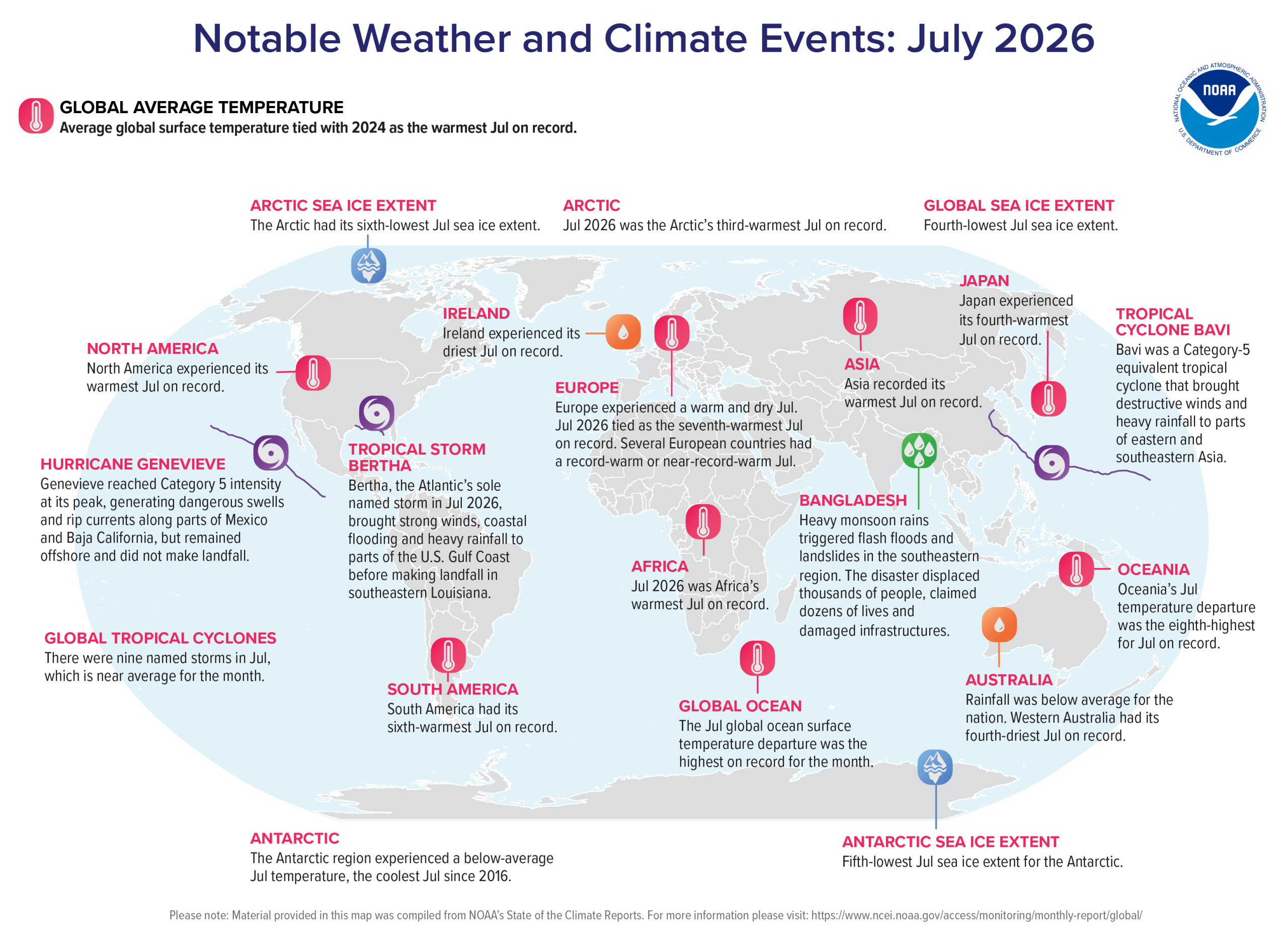
The U.S. National Oceanic and Atmospheric Administration (NOAA) confirmed that July 2026 tied with July 2024 as the hottest July on record globally. The Copernicus Climate Change Service, implemented by the European Centre for Medium-Range Weather Forecasts (ECMWF), ranked it as the second-warmest July, with an average surface air temperature 1.47°C above the estimated pre-industrial baseline (1850–1900 average). Data from both agencies show that global sea surface temperatures reached their highest levels on record in July. The WMO cautioned that the long-term warming trend deserves more attention than rankings for any individual month: all ten of the hottest Julys on record have occurred since 2016, and the four consecutive years from 2023 to 2026 occupy the top four places.
Regionally, North America, Africa, and Asia experienced their hottest July on record; Western Europe saw its hottest June–July period on record, and the heat has continued into August, with some countries enduring their fourth heatwave since May. The combination of persistent high temperatures, unusually low soil moisture, and drought has had severe impacts on ecosystems, agriculture, river levels, transportation, and energy supplies.
From a meteorological monitoring technology perspective, this series of high-impact events has once again demonstrated the value of reliable, timely forecasts and early warning systems. High-density ground-based automatic weather stations, ultrasonic anemometers, atmospheric electric field instruments, and other equipment can capture changes in temperature, wind fields, and lightning activity in real time, providing foundational observational data for numerical weather prediction and disaster early warning. Satellite remote sensing and ocean observations fill monitoring gaps in remote areas. For heatwaves and drought, continuous monitoring of air temperature and humidity, soil moisture, and vegetation status is equally important. Meteorological services need to closely integrate observation and early warning with decision-making processes in agriculture, energy, transportation, and other sectors to effectively reduce the cascading impacts of extreme weather.
Source: World Meteorological Organization (WMO) (Link: https://wmo.int/media/news/record-breaking-heat-and-extreme-weather-continue)
 Nepal Flood Cascading Risks Highlight High-Mountain Weather
 WMO Supports Five Countries in Strengthening Multi-Hazard Ea
 Cabo Verde Validates Early Warning Roadmap After Tropical St