
Above- and Below-Normal Winter Rainfall Set to Coexist Across South Asia
According to the World Meteorological Organization (WMO), the latest seasonal outlook issued by the South Asian Climate Outlook Forum (SASCOF) indicates that during October–December, precipitation in northwestern South Asia and parts of the region’s east and south (including the island nations) is expected to be near normal to above normal, while most of the south-central peninsula and parts of the east may see below-normal rainfall.

On temperatures, both maximum and minimum values across most of the region are expected to be near normal to above normal over the period. The outlook covers nine countries: Afghanistan, Bangladesh, Bhutan, India, Maldives, Myanmar, Nepal, Pakistan and Sri Lanka.
Strong El Niño Dominates the Seasonal Climate Signal
This outlook reflects the strong El Niño conditions currently observed over the equatorial Pacific, while the Indian Ocean maintains a neutral Indian Ocean Dipole (IOD) state. Sea surface temperature monitoring shows above-average SSTs across the eastern equatorial Pacific and much of the Indian Ocean.

The latest predictions from multiple climate models indicate an increased likelihood that strong El Niño conditions will persist through October–December, with a similarly high probability that the IOD will remain neutral. Such large-scale drivers have long been key modulators of climate variability in South Asia.
Critical Winter Rains Shape Farming and Water Resource Planning
October–December rainfall is especially critical for southern South Asia: southern India, Sri Lanka and the Maldives receive a substantial share of their annual precipitation in this window, directly underpinning agricultural production, while northeastern areas including Afghanistan also see a considerable proportion of their yearly rainfall concentrated in these months. As a result, seasonal-scale climate information has become a key reference for crop planning and water resource allocation.
Seasonal Outlooks Need Ground-Based Observations for Verification
This consensus outlook was produced by experts from the national meteorological and hydrological services of the nine countries, working alongside specialists from the WMO, the Regional Climate Centre in Pune, the UK Met Office and the Japan Meteorological Agency. Its core methodology spans sea surface temperature monitoring, multi-model ensemble prediction and regional expert consensus. From an industry perspective, turning seasonal signals into concrete decisions on farms and in river basins still hinges on continuous, reliable local observations as a foundation for calibration and validation.
For example, in settings such as agricultural parks and reservoir catchments, deploying compact weather stations to continuously capture measured rainfall and temperature data can help users translate seasonal trends into actionable farming and water-dispatch plans.
Source: World Meteorological Organization (WMO) (link: https://wmo.int/media/news/el-nino-influences-south-asia-winter-climate-outlook)
 Trusted Forecasts Become Decision-Critical as Meteorological
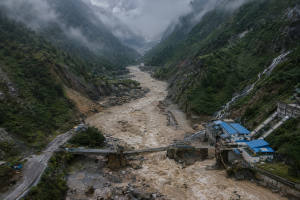 Nepal Flood Cascading Risks Highlight High-Mountain Weather
 WMO Supports Five Countries in Strengthening Multi-Hazard Ea