
Flash Flood in Budhi Gandaki River System Reveals Emerging Cascading Disaster Chain
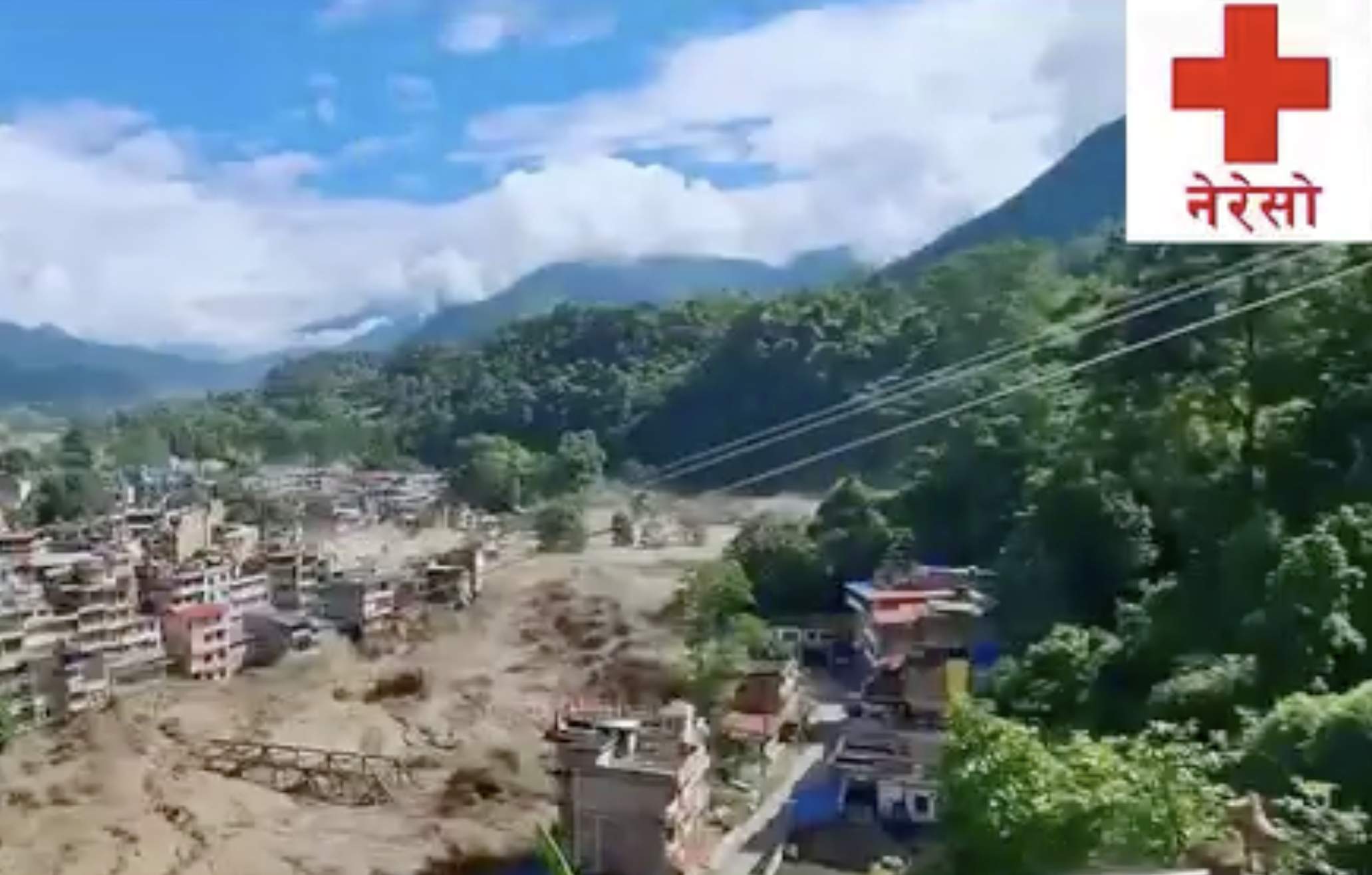
The World Meteorological Organization (WMO) reported on 12 October that Nepal has been hit by another major flood. According to preliminary notifications from Nepalese authorities and a review by the International Centre for Integrated Mountain Development (ICIMOD), the flash flood that swept through the Budhi Gandaki river system in central Nepal on 11 October may have been triggered by the breach of a temporary river blockage formed by a landslide. Authorities have issued warnings to riverside communities, and initial reports indicate missing people and severe damage to houses, bridges and hydropower infrastructure.
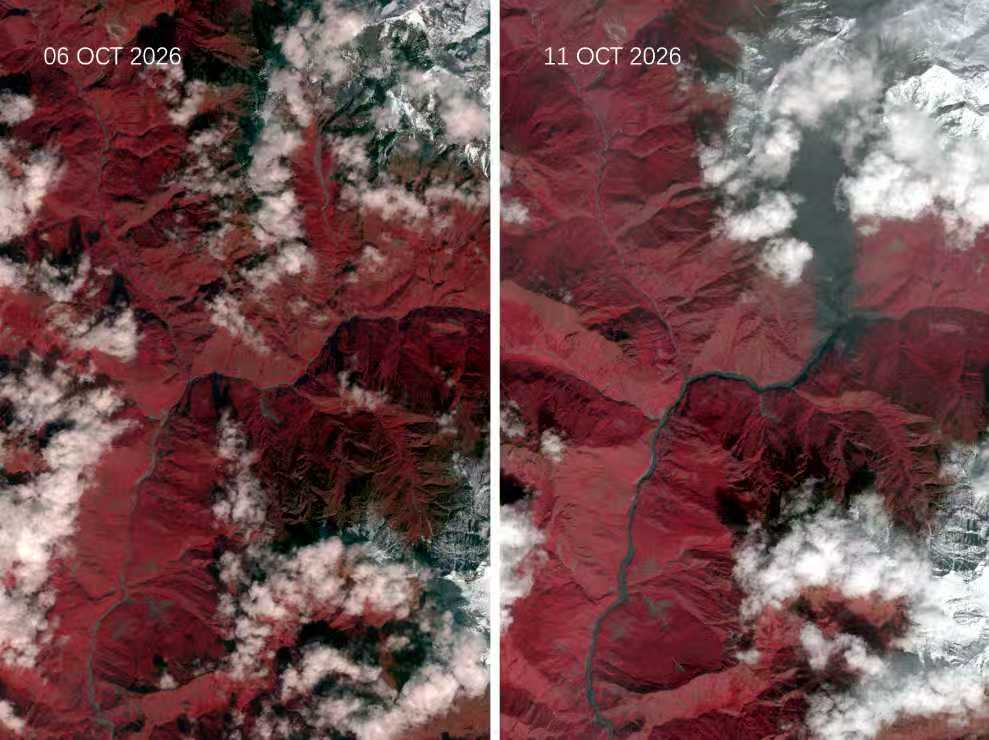
ICIMOD Director General Pema Gyamtsho said the event, coming immediately after the Gyirong-Rasuwa disaster, is another reminder that mountain communities and river corridors remain exposed to sudden, cascading hazards. Emergency response is the immediate priority, but understanding the trigger mechanisms is crucial to reducing future risks and building resilience.
Cryosphere Change and Seismic Destabilization Raise Basin Hazard Potential
Previously, Nepal was still recovering from the 26 August disaster: a massive block of rock and glacier ice detached from a mountain at about 5,200 metres and fell into the valley, forming a huge torrent carrying water and debris in the Lende and Bhote Koshi river systems, destroying mountain communities and causing significant casualties.
On 7 October, the joint WMO and Global Water Partnership flood management programme convened an expert online exchange on cascading flood risks in mountain regions. Participating experts noted that glacier retreat and alpine permafrost thaw, along with the destabilization of mountain structures caused by a strong earthquake more than a decade ago, could exacerbate slope instability. Abnormally high temperatures before the collapse may have increased meltwater, and a higher proportion of precipitation falling as rain may also have played a role.
Compound Risks Push Monitoring Logic from Single-Point Rainfall to Multi-Factor Coupling
From a meteorological monitoring technology perspective, the challenge of such disasters lies in their ‘compound’ nature: the hazard drivers are no longer merely precipitation, but the temporal coupling of ice avalanches, landslides, landslide-dam breaches and intense rainfall. Early warning driven solely by rainfall thresholds struggles to cover the earlier stages of the chain. Only by integrating cryosphere conditions, slope deformation, river blockage and abrupt water-level changes into a single observation system can signals be captured earlier.
Observation Gaps in High-Mountain Basins Call for Low-Power, Low-Maintenance Deployments
High-altitude basins without grid power and with poor communications remain observation blind spots. Continuously acquiring temperature, precipitation phase, wind speed and direction, among other variables, provides localized evidence for assessing melt intensity and precipitation form. Ultrasonic wind speed and direction sensors have no mechanical moving parts, require less maintenance under severe cold and icing conditions, and are well suited for deployment at glacier fronts and canyon mouths.
Abrupt changes in water level, turbidity and conductivity often arrive before downstream flood peaks, and can serve as auxiliary identification signals for breach-type floods, extending water-quality monitoring sensors from water-environment management tools to a link in disaster-chain monitoring.
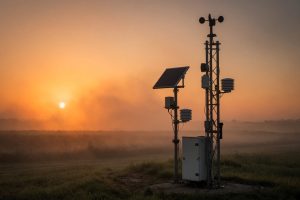
For high-mountain basins, deploying equipment such as Micro Weather Station at the front end of the hazard chain is a practical path to filling observation gaps and supporting cascading risk early warning.
Source: World Meteorological Organization (WMO) (link: https://wmo.int/media/news/nepal-floods-are-call-action-compound-risks)
 WMO Supports Five Countries in Strengthening Multi-Hazard Ea
 Cabo Verde Validates Early Warning Roadmap After Tropical St
 WMO Report Warns: Wildfires and Heatwaves Weigh on Global Ai