
Warming Sea Surface Temperatures Point to Strengthening El Niño
The World Meteorological Organization (WMO) announced on 8 October in Geneva, Switzerland, that central and eastern tropical Pacific sea surface temperatures are expected to rise to record levels from October to December 2026, reflecting a strengthening El Niño. WMO’s monthly Global Seasonal Climate Outlook indicates that El Niño will continue to strengthen before its predicted peak in December, potentially bringing above-average temperatures to much of the world, altering rainfall patterns, and increasing the risk of drought and flooding in different regions.
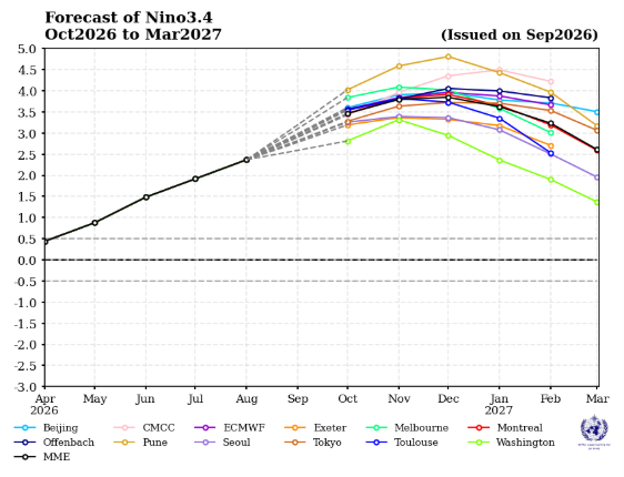
WMO Secretary-General Celeste Saulo said El Niño is already firmly established and rapidly strengthening. WMO forecasts a near-100% probability that it will persist through February 2027, and it could become one of the strongest events since at least 1950. This assessment does not come from a single model but represents a consensus among 13 national and international centers, involving institutions from Washington to Tokyo and London to Pune, based on real-time data exchange of ocean buoys, satellites, and radiosondes coordinated by WMO.
Seasonal Forecasts Rely on Multi-Source Ocean-Atmosphere Monitoring Consensus
The Global Seasonal Climate Outlook provides authoritative information on large-scale climate drivers, including the El Niño–Southern Oscillation (ENSO), the Indian Ocean Dipole (IOD), and tropical Atlantic sea surface temperatures. These factors jointly influence seasonal temperatures and rainfall and complement WMO’s quarterly El Niño/La Niña updates.

From a monitoring technology perspective, equatorial Pacific sea surface temperature anomalies are the core indicator for determining El Niño’s strength and location. Ocean buoys provide in situ surface and subsurface data, satellite remote sensing covers large-scale sea surface temperature fields, and radiosondes supplement atmospheric vertical structure. Only through real-time exchange of multi-source data can cross-regional centers form a near-consistent seasonal outlook and provide a decision-making window for agriculture, energy, insurance, hydrology, and emergency management.
Ocean Heat Storage Release Amplifies Extreme Weather Risks
Speaking in Bangkok about global heat, Saulo noted that El Niño does not add new heat to the planet; it releases heat already stored below the ocean surface. As a result, strong events are often accompanied by one of the hottest years on record, such as 2024. She also said the ocean is currently the warmest it has been since measurements began, with more heat available for release.
This explains why El Niño not only affects sea temperatures but also alters global rainfall distribution through adjustments in atmospheric circulation. Some regions may face drought, while others may experience flooding. For the meteorological services industry, the key is not just predicting the strength of an event but also translating large-scale signals into risk information at regional, river-basin, and user scales.
Bridging Seasonal Signals and Ground-Level Water Quality Monitoring
Against an El Niño backdrop, the spatial and temporal distribution of rainfall becomes more uneven, and hydrological and water quality risks may rise in tandem. Enhanced ground-based observations can supplement seasonal forecasts with local details; micro weather stations, ultrasonic wind speed and direction sensors, and atmospheric electric field mills for lightning warning can respectively support local weather, wind fields, and severe convective protection. When changes in rainfall and runoff may affect water quality indicators, deploying Water Quality Monitoring Sensors can help continuously track changes in water quality.
For commercial weather services, combining global ocean-atmosphere monitoring, seasonal forecasting, and ground sensor networks is essential to translate El Niño signals into concrete industry scenarios and improve risk identification and response efficiency.
Source: World Meteorological Organization (WMO) (Link: https://wmo.int/media/news/sea-surface-temperatures-reflect-strengthening-el-nino)
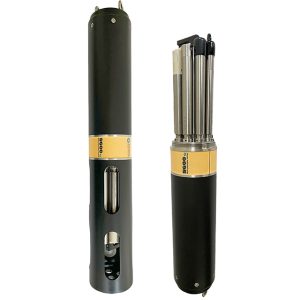 Multi-Parameter Water Quality Sensors in Mariculture