
Tropical Storm Gonzalo Tests Every Link in the Warning Chain
On 29 September 2026, Cabo Verde completed validation of its national Early Warnings for All (EW4All) roadmap in Praia. Days earlier, Tropical Storm Gonzalo brought flooding to parts of Sal Island, inundating the Santa Maria area and damaging coastal infrastructure. Early warnings gave authorities and residents time to take protective measures, and no deaths were reported. The storm demonstrated the value of early warnings while exposing the need to strengthen every link between disaster monitoring and public action.
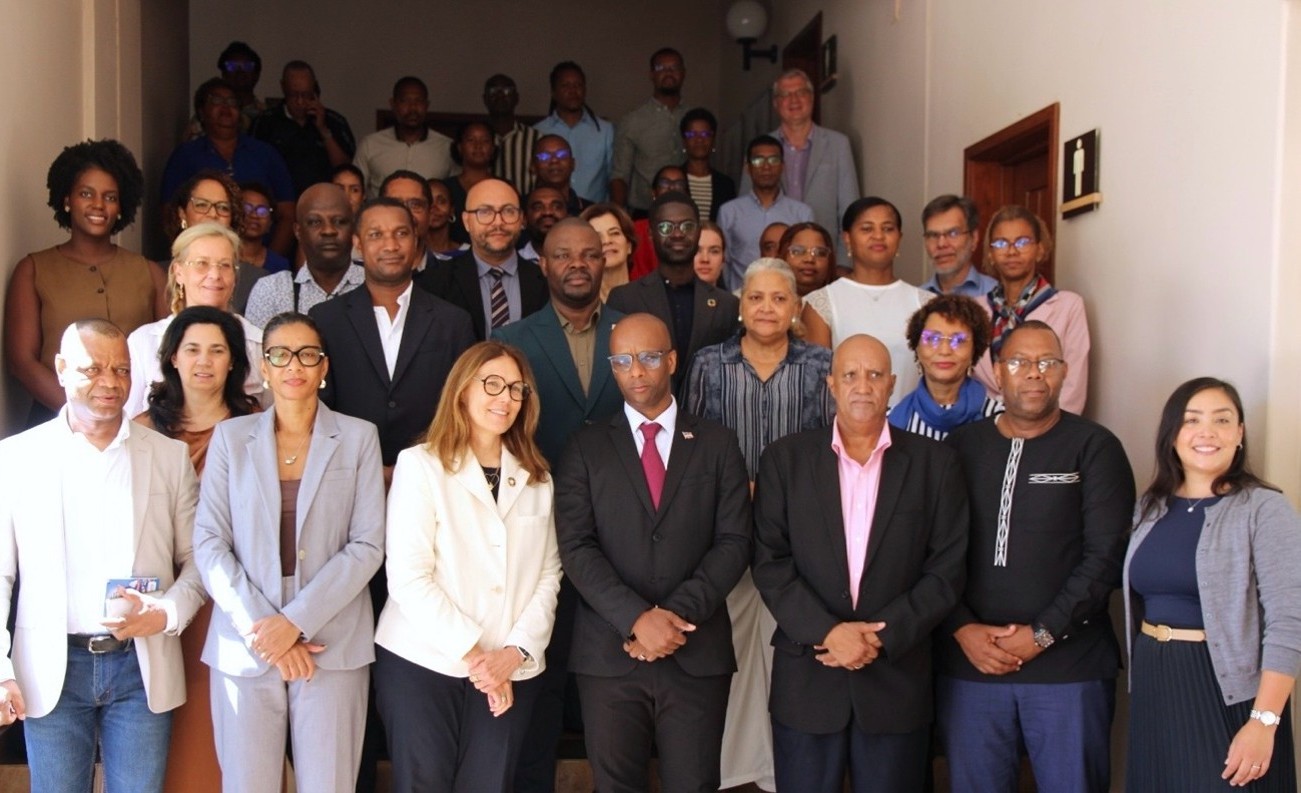
Multi-Hazard Roadmap Links Monitoring, Forecasting, and Response
The roadmap takes a multi-hazard approach, connecting risk knowledge, monitoring and forecasting, warning dissemination, and preparedness and response. It was developed through a consultative process led by four national pillar lead agencies in Cabo Verde: the National Civil Protection and Fire Service, the National Institute of Meteorology and Geophysics, the Multisectoral Economic Regulation Agency, and the Cabo Verde Red Cross; the process was led by the Minister of Environment, Climate Action and Energy, with support from the National Secretariat for Climate Action. Validation marks the next phase: mobilizing resources and putting the roadmap into practice.
Observations Financing and El Niño Risk Add Urgency
Financing and observational capacity-building are already advancing. The Systematic Observations Financing Facility (SOFF) is supporting the second pillar of Early Warnings for All—strengthening the observations that underpin forecasting and warnings. The United Nations Environment Programme has also submitted a concept note to the Green Climate Fund to help implement the roadmap’s priorities.
The roadmap comes as attention focuses on the risk of weather and climate extremes associated with a developing El Niño. The World Meteorological Organization has warned that it could become very strong, raising the risk of extreme events in 2027.
Industry Perspective: Observation Density Determines Warning Lead Time
From a meteorological monitoring technology perspective, the roadmap’s value lies in building observation–forecast–warning–response as a complete chain. For warnings to be accessible and actionable, the observation network must be sufficiently dense: automatic surface weather stations provide minute-level temperature, humidity, pressure, and precipitation data; ultrasonic anemometers continuously output wind observations in coastal and storm-prone areas; and lightning warning equipment fills a key gap in nowcasting severe convection. If the spatiotemporal density of observations is insufficient, the starting point for numerical models and nowcasting becomes distorted, and the lead time and credibility of warnings decline accordingly.
As an island nation, Cabo Verde’s coastal infrastructure and population centers are especially sensitive to strong winds, heavy rainfall, and storm surges. Under such conditions, station deployment density, power and communications resilience, and data transmission stability often directly determine how much lead time a warning can provide. By placing monitoring and forecasting alongside warning dissemination and preparedness and response, the roadmap also signals to industry: equipment is only the starting point; the warning chain is not closed until data can enter operational workflows and be translated into actionable information.
For projects seeking to improve coastal and local observation density, Micro Weather Stations can serve as foundational nodes in a ground observation network, working with wind and lightning monitoring equipment to complete the observation segment of the warning chain.
Source: World Meteorological Organization (WMO) (link: https://wmo.int/media/project-update/cabo-verde-validates-early-warnings-all-roadmap-following-tropical-storm-gonzalo)
 Nepal Flood Cascading Risks Highlight High-Mountain Weather
 WMO Supports Five Countries in Strengthening Multi-Hazard Ea
 WMO Report Warns: Wildfires and Heatwaves Weigh on Global Ai